

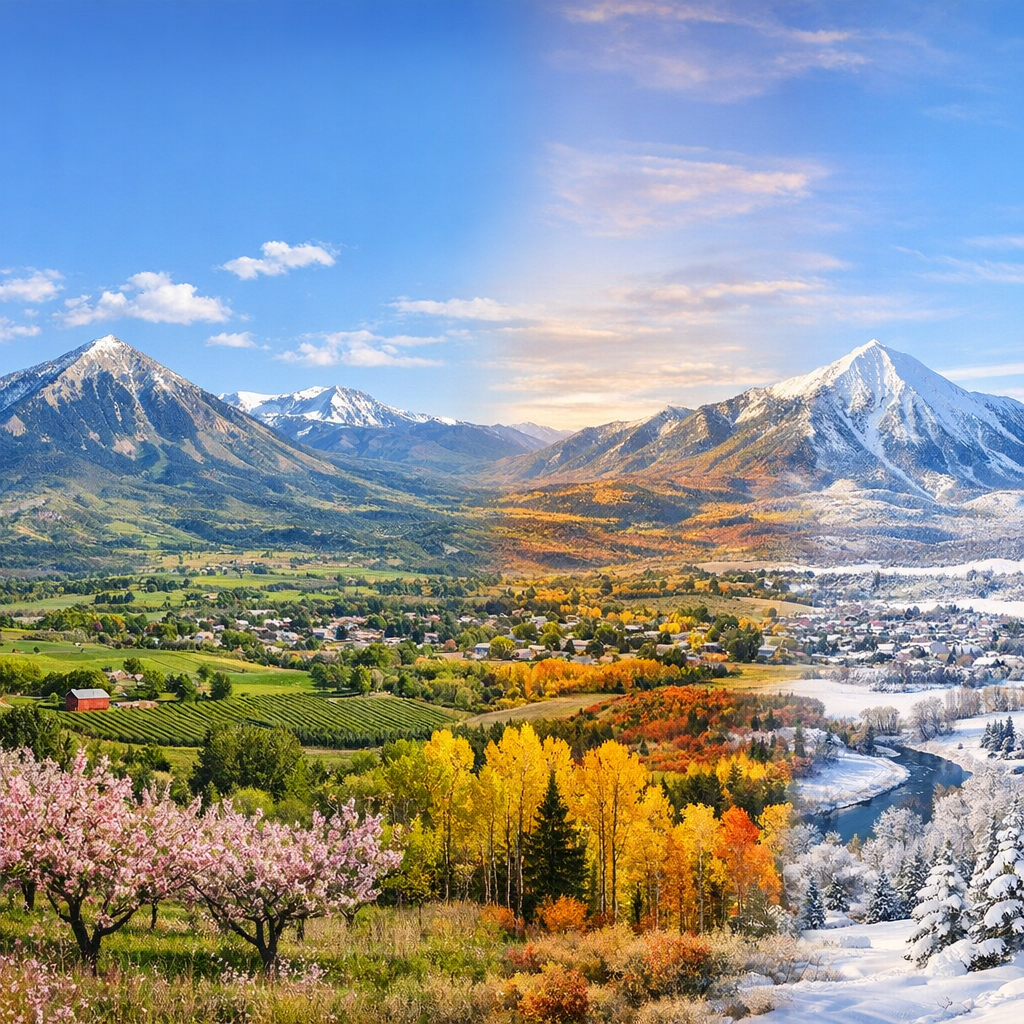
Paonia, Colorado, nestled in the North Fork Valley, experiences a diverse climate characterized by distinct seasonal variations. Understanding these patterns is essential for residents to prepare for the year’s weather conditions.
Seasonal Overview
Winter
Winters in Paonia are cold and snowy. Average low temperatures in January can drop to around 16°F (-9°C), with highs reaching approximately 39°F (4°C). Snowfall is common, contributing to the town’s picturesque winter landscape.
Spring
Spring brings a gradual warming trend. By April, average highs reach about 63°F (17°C), with lows around 34°F (1°C). This season also sees increased precipitation, averaging 1.20 inches (30 mm) in April, supporting the blooming of local flora.
Summer
Summers are warm and relatively dry. July, the warmest month, features average highs of 90°F (32°C) and lows around 57°F (14°C). Precipitation during this period is lower, with July averaging 1.03 inches (26 mm) of rainfall.
Autumn
Autumn sees cooling temperatures and increased precipitation. By October, average highs are around 67°F (19°C), with lows near 37°F (3°C). Rainfall averages 1.44 inches (37 mm) in October, preparing the region for the upcoming winter.
Environmental Considerations
Paonia’s climate influences local agriculture, water resources, and outdoor activities. Residents should be mindful of seasonal weather patterns, especially during transitional periods, to plan accordingly for farming, recreation, and daily life.
By staying informed about Paonia’s climate, residents can better appreciate and adapt to the natural rhythms of their environment.